 
 THE
ANTLERS - Familiars (ANTI-) THE
ANTLERS - Familiars (ANTI-)
It’s no secret that I admire bands that still make
albums. I’m not talking about the album as a collection
of songs, or the album as a handful of singles cushioned
by some B-level material. As opposed to an album wherein
each song exists in isolation and speaks for itself, I admire
an album wherein a bunch of songs work together to make
a singular statement.
With the release of Hospice in 2009, it became
clear that Brooklyn’s The Antlers were masters of
album-as-statement. Hospice—an indie rock
game changer very nearly on par with Arcade Fire’s
Funeral or The National’s Alligator—is
a dark, harrowing work of bedroom pop. Songs blend into
one another as melodic and lyrical themes recur. Its narrative
arc unfurls through flashback. Frontman and songsmith Peter
Silberman blends romantic despair, exhaustion and illness
using a fine, novelistic touch. To risk stating the obvious,
however, Hospice is not an album for every occasion.
Experiencing its many aches and anxieties is hugely demanding
on the listener. One comes out the other end emotionally
wrung-out, purged of demons, exhausted and cleansed after
what must be the auditory equivalent of hot yoga.
After Hospice came 2011’s Burst Apart,
an excellent album with a lighter tone and greater dynamic
range. Next came the "Undersea" EP, which forewent
the groovy buoyancy of Burst Apart in favor of
a beautifully sleepy, liquid vibe.
Familiars, released in late June on ANTI-, finds
The Antlers doing all of the things they do best. Familiars
returns to the conceptual and sonic coherence of Hospice,
but also retains the melodic levity of Burst Apart
and the delicious murkiness of "Undersea."
Our first taste of Familiars was the opening track
and first single, “Palace.” It is a beautifully
haunting number, building slowly with layered, muted trumpets
and tentatively swelling drums over its 5-and-a-half minutes.
Contenders for second single include the slinky “Hotel”
and the late-album stand-out “Parade.” The latter
of those two boasts one of Silberman’s finest vocal
performances to date, and the album as a whole finds him
singing with a newfound confidence, favoring a full-bodied
head voice over the doubled, whispered falsetto he employed
on much of Hospice. Another personal favorite of
mine is “Director,” in which an extremely simple
guitar lead provides a really satisfying melodic payoff.
All that being said, Familiars is best enjoyed
in one bite. Each song bleeds into the next, and each song—there
are nine of them in total, each with a one-word title—is
characterized by warm synth beds, delicate drums, and careful
horn arrangements. Songs—like “Revisited,”
where layered guitars interplay as the song reaches its
peak—often give way to gorgeous oceans of instrumentation
unlike anything this band has previously achieved. The album
as a whole is an unabashedly dense work, lacking completely
anything resembling an uptempo number, but its innumerable
nuances reveal themselves gradually over the course of several
listens. It is an album that manages to feel slow but never
dirge-like, relaxed but never lethargic, melancholy but
never depressing. Familiars is an album of incredible
depth, but a listener who takes it on might very well find
himself with a new obsession.
 MANCHESTER
ORCHESTRA - Cope (Loma Vista/Republic) MANCHESTER
ORCHESTRA - Cope (Loma Vista/Republic)
Critics of Cope, the new one from Atlanta, GA’s
Manchester Orchestra, have been quick to express disappointment
in the album’s apparent lack of sonic range. When
I first read frontman Andy Hull’s widely-published
claim that with Cope, the band wanted to produce
something that was “brutal…just pounding you
over the head with every track,” I was thrilled. Manchester
Orchestra had been on my radar for a while, but I never
paid them the attention they deserved until Hull joined
forces with Kevin Devine and churned out two phenomenal
records as Bad Books. At that point, I revisited my copies
of Like a Virgin Losing a Child, Mean Everything to
Nothing and Simple Math. Those albums, particularly
the latter two, have a number of truly incredible songs,
but I kept coming to the same conclusion about the band:
they were always trying to do too much. It is one thing
for an album to have an impressive dynamic range, but another
for an album to be so all over the map that no listener
can have a cohesive, satisfying listening experience. It
is no surprise, perhaps, that I ultimately became much more
enamored with Hull’s solo acoustic side project, Right
Away Great Captain!, in particular the chilling The
Church of the Good Thief, which brings the RAGC! trilogy
to an incredible close. That record exists in a deliberately
limited sonic range, employing minimal instrumentation and
stark production, but it does not lack in emotional impact.
Cope shares The Good Thief’s commitment
to one dynamic, but exists on the opposite end of that spectrum,
boasting eleven songs that are entirely true to Hull’s
promise of a brutal rock record. It is a grave mistake to
equate a lack of dynamic range with a lack of emotional
range, and Cope’s impact is no less than
that of any other Manchester Orchestra record. Gone are
the theatrics of past albums; you will find no synths, no
strings, and no children’s choir on this record. What
is left is a truly huge rock album, dominated by thick,
double-tracked guitars and a clenched-fist confidence that
modern rock albums rarely display.
Monstrous opening track and first single “Top Notch”
is a fair indicator of what is to come. In addition to shrieking
guitars and thunderous drums, the song also boasts one of
Hull’s best vocal deliveries to date. This vocal strength
remains for the duration of the record. Hull’s voice
has never sounded better, and his melodies have never been
more memorable. “Choose You” and mid-album showstopper
“All That I Really Wanted” are both fine examples,
showcasing some of the most compelling song structure Hull
has yet worked with. The band, also, does not relent. The
title track, which closes the collection, is a contender
for the heaviest ever song on a Manchester Orchestra record,
whereas second single “Every Stone” is awash
with ringing guitars and triumphant hooks. The latter might
very well be the best song on here, and it is certainly
one of the most rewarding on first listen.
My point, ultimately, is this: just because a record is
loud, it doesn’t mean it is dumb. “Choose You”’s
first verse begins: “The invention of the ship was
the invention of the shipwreck / I tried to find out who
I was by jumping off the deck.” This is as smart and
nuanced an album as Hull and co. have ever produced, it
just exists within a smaller sonic spectrum. The image of
a band sweating it out in the studio, losing sleep over
flute overdubs, is not always the image of a good band.
To make a record like Cope, the guys in Manchester Orchestra
had to have total faith in their ability as musicians and
songsmiths. To my ears, Cope is the right move.
 LAURA
STEVENSON – Wheel (Don Giovanni Records) LAURA
STEVENSON – Wheel (Don Giovanni Records)
When you listen to Laura Stevenson’s Wheel,
you know it wants to tell you something. It’s brimming
with dark imagery and burning questions. It’s intimate.
It’s dynamic. From the very first listen, you know
it’s a special record deserving of time and attention,
a beautiful riddle to be unlocked, a language you recognize
but just can’t quite get a handle on. So, you keep
listening, taking in the entire statement from beginning
to end. After the fifth listen, you might begin to have
a handle on the questions Stevenson is asking. After the
tenth, you’ll start to realize that there are no answers.
Wheel is, without question, Stevenson’s
most rewarding work to date. A Long Island native with a
musical bloodline and a unique voice, she churned out two
excellent prior LPs under the moniker Laura Stevenson and
the Cans. With Wheel, Laura loses the “and
the Cans,” inherently emphasizing the personal aspect
of what already feels to be a deeply personal record.
Though it is credited only to Laura, it would be unfair
(and nearly impossible) to discuss Wheel without touching
on the instrumentation. One of the first things you notice
about Wheel is its muscle. Probably due in no small part
to Kevin McMahon’s production, its dynamics are astonishing.
The drums and guitars are huge when the song calls for it,
and early-album highlights like “Triangle” and
“Runner” flat out rock. Wheel effortlessly
reaches the heights that some of Stevenson’s best-loved
Sit/Resist songs aimed for. Wheel takes songs like
best-pop-tune-of-2011 “Master of Art” or the
soaring “The Wait” and uses them as a starting
point, sonically expanding them in every direction. The
album oozes confidence; it’s the sound of musicians
whose chops have been refined by countless shows in nameless
college towns, innumerable hours spent in a van on America’s
highways. Stevenson and her band deliver tear-stained Americana
(the stunning opener “Renee,” the understated
“Journey to the Center of the Earth”) and anthemic
indie rock (“Runner,” “Telluride”)
with incredible ease. Wheel is likely the only
album you’ll hear this year that will amass as many
comparisons to Patsy Cline as it will to “In Utero.”
The component that binds together Wheel’s sonic range
together is, of course, Stevenson’s songwriting. Her
lyrical vocabulary is exceptional, matched only by her uniquely
memorable melodic vocabulary. Lines from Wheel
will swim around in your head for days on end; “the
hardest part is getting older;” “we turn over
like a wheel;” “you are a speck in a pile of
dust / and everything you love will turn into crumbs / so
stop worrying;” “and I’ll wait for my
mother, supposing she’d bother, to hold me and keep
me a while;” “this summer hurts.” The
entirely acoustic “The Move” feels direct and
intimate, whereas her emotional delivery on “L-DOPA”
turns an already great song into an absolute knock-out.
She intonates with a tender lilt, her voice softening the
blow of each successively devastating line.
Wheel is, rather uniquely, an album without a
discernible setting. It does not get bogged down in geography
or linear narratives. Instead, it is rewarding and relatable
for a different reason on nearly every listen. Naming a
record Wheel invites the use of cyclical metaphors
when discussing it, but I will only use one: this record
is best enjoyed on an endless loop.
 CHRISTOPHER
OWENS – Lysandre (Fat Possum ) CHRISTOPHER
OWENS – Lysandre (Fat Possum )
When the Internet originally began buzzing about the disbandment
of Girls, nobody seemed particularly concerned about whether
or not Christopher Owens would continue to make music. Girls’s
second and genuinely great LP, Father, Son, Holy Ghost,
seemed to cement the portrait of Owens as a confident and
gifted songwriter, and the possibility of him running out
of ideas at that point seemed unlikely. The big concern,
instead, was how Owens’s tunes would sound without
J.R. White (the only other constant member of Girls) producing
(or at least co-producing) them.
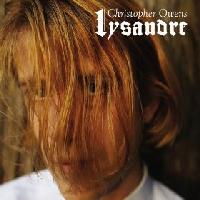
The release of Owens’s first solo record, Lysandre,
should alleviate those concerns. The production is crisp
and clean, and the instrumentation is thoroughly well-arranged
and well-executed. It also closely resembles, sonically,
a lot of the softer shades of Father, Son, Holy Ghost. However,
coming on the heels of such a monstrous album, the sub-thirty-minute
Lysandre is still a bit of a puzzle for listeners for entirely
different reasons.
In interviews, Owens has been very open about the fact
that Lysandre is a concept album, chronicling Girls’s
first big tour behind their debut Album, and a romantic
tryst that began (and ended) in correspondence with that
tour. The phrase “concept album” carries quite
a bit of weight. We are moved to imagine a sprawling, cathartically
epic musical journey in the vein of The Decemberists’s
Hazards of Love or Titus Andronicus’s The Monitor,
and there isn’t much doubt that Owens could easily
stitch together such an album if the mood struck him. Instead,
Lysandre is extremely compact, almost a mini-LP, and as
such it underwhelms nearly as often as it impresses.
The record opens with “Lysandre’s Theme,”
a 40-second flute melody that will (spoiler alert!) appear
at the end of nearly every song on the album. The theme
itself is lovely, but often the songs that resolve in it
(like the bounding “New York City”) feel truncated,
as if Owens’s adherence to a verse-chorus-verse-chorus-theme-reprisal
form is preventing the song from reaching its potential.
Also disruptive is the side two opener and instrumental
“Riviera Rock,” which takes the same theme and
makes it unfortunately funky—truthfully, the track
sounds like a lazy underscore from a cheesy musical.
Like the record as a whole, Owens’s lyrical approach
on Lysandre is extremely direct. Sometimes, the result is
a bit cringe-inducing (“What if I am just a bad songwriter
and everything I say has been said before? / Well everything
to say has been said before and that’s not what makes
or breaks a song”), but other times it completely
hits home (“Walking back down through the city, we
stopped everywhere you knew / You said you felt so in love,
I said that I felt it too”). Lysandre is at its best
when Owens fully embraces the ‘70s singer/songwriter
vibe that he danced with occasionally on Father, Son, Holy
Ghost. “Here We Go,” the album’s first
proper song, is a truly wonderful showcase of all of Owens’s
best qualities, especially his voice and some excellent
guitar work. The tasteful addition of flute and hushed female
vocals also sound great, the latter being perhaps the most
welcome new texture on this record. The closing track, “Part
of Me (Lysandre’s Epilogue)” is another of the
album’s finest moments; Owens’s frank vocals
spread over an almost-twangy musical backdrop to recall
Townes Van Zandt at his most bittersweet.
In the end, Lysandre is certainly good, but maybe not great;
it doesn’t feel rounded out in all the right places.
It is a perplexing record because it commits wholeheartedly
to a concept and a feel, yet does not feel musically or
thematically complete. It is a promising solo debut, and
“promising” would be entirely a positive were
we not talking about Christopher Owens.
 Bad
Books – Bad Books II (Triple Crown Records) Bad
Books – Bad Books II (Triple Crown Records)
It seems like there's been a lot of talk of supergroups
lately.
It's difficult to begin a review of a collaboration between
multiple artists - a (ugh) "supergroup" - without
first assessing its success as a collaboration. Do they
try so hard to avoid stepping on each other's toes that
we hear something that sounds more like an extended split
7-inch than an entirely new band? Will we get Monsters of
Folk, where it's painfully obvious that all of the band's
members are saving their best songs for their solo projects?
Or Middle Brother, where all the songwriters bring their
A-game and the end result is a sparkling, cohesive work?
It seems to me that the highest praise that a collaboration
between two already established artists can get is praise
that has most recently been garnered by St. Vincent and
David Byrne: you can hear both of them in it, but Love This
Giant is no more a direct follow-up to Strange Mercy than
it is to Everything That Happens Will Happen Today. It is
a true collaboration, and entirely its own entity.
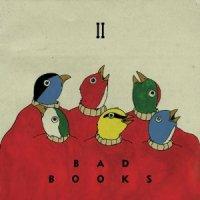
Bad Books II, the (aptly-titled) follow-up to Bad Books'
immensely wonderful self-titled debut, finds Manchester
Orchestra's Andy Hull and singer-songwriter Kevin Devine
pulling off something that many "supergroups"
never do: A second album. Many collaborations of this nature,
regardless of their success, seem destined to only happen
once. Bad Books II also passes the "supergroup test"
with flying colors: Although it feels like the contemplative
younger brother to the towering older siblings of Kevin
Devine's melancholy pop opus Between the Concrete &
the Clouds and Manchester Orchestra's epically dark Simple
Math, it is completely its own album. Despite comprising
several members of Manchester Orchestra aside from Hull,
as well as drummer Ben Homola (who, if I'm not mistaken,
shines just as much on Between the Concrete & the Clouds
as he does here), Bad Books really sounds like its own band.
All talk of supergroups aside, II is a wonderful album.
It is so good, and so self-sufficient, that it could easily
be recommended to someone who is not familiar with the back-catalogues
of either Andy Hull or Kevin Devine. The two of them have
successfully provided the gateway drug to this album, this
band, and all their other bands with the unstoppable lead
single "Forest Whitaker." Distorted electronic
drums, muted guitars and twisted synths provide the brilliantly
understated backdrop to some of the most memorable, direct
and darkly funny lyrics on the album ("You found a
guy that is clearly the opposite me with a black motorbike
/ I dicked around but it's just like a movie thats picture
is off with the sound"). Devine follows this tune with
the effortlessly anthemic "It Never Stops," a
song that a lesser band might build their entire career
around, before stepping aside and letting Hull take the
lead on the sparse, brooding "Pyotr." Sequenced
dead center, "Pyotr" serves as the album's emotional
core, but the real payoff, as far as I'm concerned, comes
much later. Clocking in at less than two-and-a-half minutes
and opening with the line "When you're with another
man inside another home, do you adopt to the walls?”
Hull's fingerpicked "42" takes aim right where
it hurts. By the time Devine lends harmonies to a final
verse in which "a man loves a drink more than blood,"
even the most casual listener will find himself completely
and utterly emotionally leveled. "42" also kicks
off the unbelievable trilogy of songs that closes the record;
they gradually bring the band back in for "Lost Creek,"
a gorgeous meditation on family and childhood, and then
Devine takes center stage, bringing us home with the aching
waltz of "Ambivalent Peaks."
II works on every level. It sounds like a bunch of guys
who know their own strengths as well as the strengths of
their bandmates, and they know when to keep it simple and
when to amp up the instrumentation. At the end of the day,
the term "supergroup" implies a level of showboating
that these guys wouldn't dream of; one gets the sense that
they're too busy enjoying playing together to even consider
it.
 Jukebox
The Ghost – Safe Travels (Yep Roc) Jukebox
The Ghost – Safe Travels (Yep Roc)
Several years ago, my high school band was on a bill at a
local place called Toquet Hall, opening for a few hard-working
touring bands. One of the bands was called Jukebox The Ghost.
"What's that band? I haven't heard of them," we
said, and, going against the gig etiquette I have since adopted,
we packed up our gear and went and got some pizza with our
four fans.
A year or two later, I went to see Ben Folds with some friends.
We came in just as the opening act started their first song.
I was impressed with them right away. They lacked a bassist,
which is usually a red flag, but they had a remarkably full
sound. The drummer was incredible, and the huge-ness of his
bass drum and toms more than made up for the hole in their
low end. The guitarist and pianist traded off singing lead
on songs, each displaying some really ridiculous technical
chops on their instruments, all the while smirking and mugging
like the Hard Day's Night-era Beatles. Their tunes were stellar.
Their harmonies were note-perfect. "What band is this?"
I asked aloud. One half of the couple in front of me answered,
enthusiastically, "this is Jukebox The Ghost!"
It was then that I realized my horrible mistake.
So, I became a fan. I got their first record, Live and
Let Ghosts, immediately, and also got its follow-up,
Everything Under the Sun, as soon as it was released.
Both albums are wonderful, but both have a rather unique flaw.
They feel as if they are trying to be concept albums, but
they don't fully succeed as concept albums. The reason for
this is the band's two songwriters, Ben Thornewill and Tommy
Siegel. Don't get me wrong, both of them are excellent songwriters,
and extremely accomplished musicians. When they write, however,
they appear to have very different concerns. Ben's songs are
almost all about romance: Ex-lovers and lust. Tommy's songs
are almost all about the end of the world. Jukebox the Ghost
albums, as a result, have two rather disparate conceptual
threads that the listener has to follow. Both writers approach
their respective subject matters with an appropriately frenzied,
youthful vigor, but the listening experience feels distinctly
incomplete. Thematically, it sounds as if the two songwriters
were so cautious about stepping on each other's toes that
the albums are completely and evenly split down the middle.
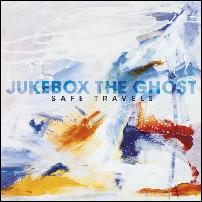
What sets their new album, Safe Travels, apart, is
their departure from these conceptual constraints. It is a
collaborative, mature and thoughtful record, fully realized
as a concept album, and fully realized as a work of art.
On Safe Travels, Ben Thornewill takes a look at relationships
and zooms out. Tommy Siegel, on the other hand, chooses a
scope more narrow than the fiery end of days. They meet somewhere
melancholy and triumph, both reckoning with loss, love and
death in a broad, relatable and utterly danceable way. Conceptually,
the album's themes all fit comfortably within the category
outlined by the title of the album's sixth track: "Adulthood."
Like he did on their previous albums, Ben occasionally addresses
an ex-lover, but this time with a distanced sense of calm,
as on the album's penultimate barnstormer "Everybody
Knows:" "You were never a soldier / You were never
a prize / You were never a soul in my eyes / Yeah, you are
childhood / Twisted and disguised." Like he has in the
past, Tommy tinges his songs with looming death, but now reigns
it in and makes it personal: "We all at minimum / Deserve
a unique exit from this world /So if you're there God / See
to it God / See to it." His concern now is not with the
demise of the human race, but with the fate of every single
one of its members. On Safe Travels, Jukebox the
Ghost has grown up, confidently shaking the synonyms for "charming"
and "quirky" that plagued reviews of their earlier
work.
I speak hyperbolically about music embarrassingly often, but
I assure you that I am not exaggerating when I say that this
is the best pop album you will hear this year. Comprising
a whopping 13 songs, this album is a monster. Only a cursory
listen, however, will reveal that not a single song is superfluous.
The album opens with four serious contenders for "lead
single," each song as wonderful as the next. My personal
favorite is "At Last," which combines a killer groove
with some awesomely cheesy '70s disco strings and comes out
the other end sounding like Dr. John's Gumbo by way of Paul
McCartney at his hokiest. Then, by the time we've hit the
pre-chorus of the emotional firecracker "Don't Let Me
Fall Behind," something becomes clear: this is not a
typical Jukebox The Ghost album. This album has an emotional
core that far surpasses that of any of their previous works,
and also that of the vast majority of the music of their contemporaries.
The band's members still get their moments to shine individually.
Ben shows off his powerful voice and mesmerizing piano chops
on "Devils On Our Side" before bringing in the band
for the equally striking "All for Love." Rather
than match Ben's dynamic double-shot, Tommy chooses the quieter
side of the coin, contributing "Man in the Moon,"
a wistfully finger-picked little number that, despite clocking
in at just under two minutes, is one of the album's many,
many highlights. However, the songwriters also play off one
another more now than they ever have before. "Ghosts
In Empty Houses," though a Tommy composition, is elevated
by Ben's soaring string arrangements. Tommy's "Say When"
and "Oh, Emily" can and do easily contend with any
of the pop singles that Ben has ever written, due largely
in part to Ben's synth parts. Album opener "Somebody,"
does not sound so much like a Ben Thornewill composition as
it does a Jukebox The Ghost song. These guys sound like a
band, and their sound as a band is truly remarkable.
It would be a colossal mistake not to mention Jesse at this
point in the game. Drummer Jesse Kristin is a powerhouse.
On every song you can hear him working tirelessly to prevent
the band from ever sounding thin, even for a second. You can
hear him inventing parts that make songs at similar tempos
sound worlds apart. On the new record, he plays with unparalleled
precision. Every kick drum hit is a punch in the gut, every
snare hit a crisp and calculated moment of brilliance. The
fills during the instrumental portion of "Say When,"
for example, elevate the song from Huey-Lewis-ripoff to amazing-Huey-Lewis-ripoff.
The way he switches the groove around during the first several
bars of "Everybody Knows" makes the mid-tempo song
feel anything but midtempo. This band and especially this
record would not be at all possible without him and his playing.
Also worth mentioning, appropriately, is "The Spiritual,"
the album's final track. Delivered with a beautiful gospel
tinge and featuring a truly heart-wrenching vocal from Thornewill
(plus some absolutely perfect harmonies from Tommy), the song
resembles nothing if not Jackson Browne or Warren Zevon at
his artistic peak. Jukebox The Ghost, despite being a power-pop
band through and through, has managed to write the song that
artists like Dawes, Blitzen Trapper and Pete Yorn have been
trying to write ever since they first heard "I Shall
Be Released." "The Spiritual" is wise and aching
regret. It is a peaceful reckoning with fate. It is a requiem.
Appropriately, for the album that precedes it, it is the best
thing this band has yet produced.
I saw Jukebox The Ghost recently, for the first time since
that fateful Ben Folds concert, on the very first stop of
the Safe Travels Tour. These three guys were totally overwhelmed
by the crowd's enthusiasm, and especially amazed that we were
already so familiar (and in love with) the material from the
new album. The show, like the album, was an exercise in vindication.
This album is truly great, and hundreds of screaming, singing
and dancing fans served as living proof of exactly that. Jukebox
The Ghost has produced a masterpiece of an album, and they
know it.
 Future
of What – Moonstruck (futureofwhat.bandcamp.com) Future
of What – Moonstruck (futureofwhat.bandcamp.com)
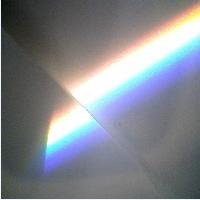
Moonstruck, the new EP from New York's Future of
What, opens with the lyric "I know what this is and I've
seen this before." And, at first, that's what many listeners
may be thinking. Though "Moonstruck" does fit comfortably
into the mellower side of today's indie pop spectrum, the
sound that Future of What achieves on this EP has a freshness
to it that I haven't heard in a while. Their online bio explains
their sound as follows: "[Moonstruck was recorded]
without using any electric guitars or cymbals. The songs are
keyboard-driven but the record isn’t electropop or anything
goofy like that—these are songs with a capital S."
For my money, this description is spot on. Though the songs
are technically driven by synths, this band carefully avoids
many of the traps that the modern moody synth band might fall
into. At no point on Moonstruck do the synths create
a hazy, muddy wash, and more importantly, at no point on
Moonstruck is any instrument, especially the vocals,
drenched by lyric-obscuring reverb. Future of What lets their
songs breathe, and it works out pretty wonderfully. The end
result sounds like Stars (or the mellower side of Metric),
with singer Blair's wistful vocals cutting through the mix
and lightly tugging at your heartstrings. Though the first
two songs are slightly more uptempo and slightly hookier,
the band, and Blair in particular, really shine on the latter
two songs. Blair (she only goes by her first name), who already
generated some buzz with her 2010 album "Die Young,"
stretches out vocally on the beautiful little ballad "White
Light." What follows may very well be the EP's strongest
moment, the tired-eyed closing track "Party in Heaven."
Propelled by some tastefully syncopated percussion, this song
is the sound of a long, hot summer night finally coming to
a close. Moonstruck is a lovely little EP, and it’s
available for free download on Future of What’s bandcamp
page, so there really isn’t any reason not to check
it out.
 The
Marble Vanity – The Marble Vanity (Slow Fizz) The
Marble Vanity – The Marble Vanity (Slow Fizz)
The Marble Vanity's self-titled debut claims to be an homage
to "baroque pop" bands of the 1960s, such as the
Zombies and The Left Banke. Right from the beginning, this
album wears its influences on its sleeve. The opening "Prelude"
is laden with vocal harmonies, reverbed guitars, bongos and
horns. It gives way to the first song proper, "Autumn
Woods," in which the sound of birds chirping and a retro
fuzzbox guitar take us to a chorus riddled with handclaps.
Later, "I Don't Know Where I End" begins with a
fuzzed-out bass that wouldn't be out of place on the Nuggets
compilation. Outside of its sonic landscape, however, this
album isn't particularly effective. '60s psych-pop is so well-loved
because the songs beneath all the interesting soundscapes
are catchy and wonderful, but on this record it feels like
The Marble Vanity devoted a lot of time to the instrumentation
and very little time to the songwriting itself. The forgettable
instrumental double-shot of "What Could Go Wrong"
and "The Hole is Filling In," for example, might
accurately appropriate some off-the-cuff 13th Floor Elevators
jam session, but there is very little, melodically, for the
listener to hold on to. The Marble Vanity is an extremely
listenable album, but it is not particularly memorable. Even
when paying homage, any kind of pop album is equal parts arrangement
and songwriting; on this record, lackluster songwriting detracts
from what are in truth some very cool arrangements.
 The
Young – Dub Egg (Matador) The
Young – Dub Egg (Matador)
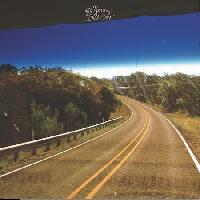
The story behind Austin, TX quartet The Young’s Dub
Egg is nothing we haven’t heard before: After
some extensive touring, the band took its newly-honed sound
to a literal cabin in the woods and recorded their sophomore
LP in a week’s time. Dub Egg also has a sound
that will be familiar to most listeners, fusing the grungier
side of Neil Young’s ‘70s output with a sound
that most closely resembles Kurt Vile. The album itself,
however, sounds entirely fresh. Throughout its course, The
Young are careful never to rely too heavily on any one sound.
Album opener “Livin’ Free” settles into
a groove and simmers there, before giving way to the brief
and hooky “Don’t Hustle for Love,” which
showcases the band’s musicianship as they experiment
with time signatures, throw some killer fuzz on that bass,
and tastefully double a few melodies with glockenspiel.
The expansive “Dance with the Ramblers” follows,
chugging along like The Dream Syndicate before a false ending
gives way to an explosive coda. Every aesthetic decision
the band makes feels deliberate and measured, and their
ability to work with sounds that the listener has heard
without ever sounding like they’re retreading old
territory is what makes this album compelling. It is varied
without being disjointed, and the familiar (like the great
fuzzy guitar solo on “Plunging Rollers,” or
the “Come On Baby Let’s Go Downtown”-esque
chug of album closer “Talking to Rose”) is complimented
by the unfamiliar (the reverb-laden vocals on “Poisoned
Hell,” or the intricate instrumentation on “Don’t
Hustle for Love”). Dub Egg may allow us to hazard
a guess as to what bands the guys in The Young grew up with,
but from song to song we really can’t tell what’s
going to happen next. The album drips with confidence, and
crisp production lets the band shine as accomplished musicians,
forging an entirely new sound out of the old.
 Boy
Things – Equations EP (boythings.bandcamp.com) Boy
Things – Equations EP (boythings.bandcamp.com)
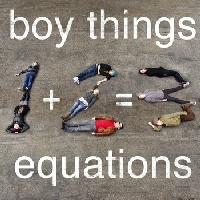
In the final seconds of “Sit, Stay, Rollover,”
the second track on Boy Things’ new EP "Equations,"
we find the band shouting, “THERE’S NO HOPE
IN JERSEY/I’M A LOSER, SO KILL ME!” The literal
shout-chorus is so obviously reminiscent of Boy Things’
fellow Jersey band Titus Andronicus that I’m moved
to wonder if it is a sincere homage or rather a carefully
aimed jab at the band. The best indie pop, however, is peppered
with such ambiguities, be it between tribute and mockery,
or, more frequently, between heartbreak and celebration.
The title track from "Equations," the new EP from
the Hackenstatt band, is indie pop at its finest. Enthusiastically
strummed acoustic guitar doubles with a clean electric,
layered over spacious, muscular drums and combined with
subtle synth to an end that might remind one of the first
Clap Your Hands Say Yeah album. A slightly strained but
not too strained vocal makes its way through an infectious
melody (just see if you won’t be humming “Keep
the pace and I don’t want to talk about it/You’re
headstrong, you’re headstrong” to yourself after
a few listens). These elements combine to toe that exact
line that only excellent indie pop bands can toe, landing
the track somewhere squarely in between endearing and devastating.
The ache continues on “Sit, Stay, Rollover,”
in which a male-female back-and-forth and some truly wonderful
lyrics (“You’re indifferent or insane/I never
thought of you that way/I never thought of you at all”)
are hit home by a fantastically simple keyboard hook. The
third track is busier and more complicated, musically, but
by the end it hits just as hard. At just three songs, "Equations"
is extremely concise, but Boy Things use pop music and all
its ambiguities to say more about youth in 11 minutes than
some bands could say in an hour.
 The
Spinto Band – The Shy Pursuit (Park the Van) The
Spinto Band – The Shy Pursuit (Park the Van)
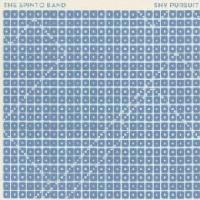
Though their debut album, Nice and Nicely Done,
did not receive a proper release until 2006, Delaware natives
The Spinto Band have actually been functioning in some capacity
since 1996. This will come as no surprise as anybody who
listens to their new album (and third full-length LP as
The Spinto Band), The Shy Pursuit. This album shows
all the marks of a band that has totally perfected its craft.
The lead single “Take It,” may very well be
one of the best songs of the year. It is a perfectly crafted
pop song at absolutely every level. The drums are impeccably
recorded, the bass line is buoyant and hooky, the guitar
solo is as memorable as the song itself, and the only thing
catchier than the vocal melody during the verses is the
vocal melody during the chorus. Harmonically, the song is
deceivingly complex; the changes during the verses are far
from conventional. What makes the song all the more impressive,
however, is just how damn easy the guys in The Spinto Band
make it sound. Anyone who has attempted to write a pop song—or,
more likely, encountered a particularly bad pop song—knows
that it is far from easy. The Shy Pursuit, however,
feels totally effortless, a quality that characterizes the
recordings of only the most skilled pop songsmiths. No melody
feels anything close to forced, yet every song is totally
successful. Album opener “Cookie Falls” is perhaps
comparable to Belle & Sebastian at their best, while
the infectious bop of “Muesli” and the sparse
instrumentation of “Leave Yourself Alone” will
appeal to even the most casual fan of Vampire Weekend. Another
highlight is “Jackhammer,” which sounds something
like Chutes Too Narrow-era Shins and features some truly
soaring guitar work. Honestly, lovers of indie pop will
find very little not to love in this album. From its first
note to its last, The Shy Pursuit is the sound
of a band on the top of its game.
JerseyBeat.com
is an independently published music fanzine
covering punk, alternative, ska, techno and garage
music, focusing on New Jersey and the Tri-State
area. For the past 25 years, the Jersey Beat music
fanzine has been the authority on the latest upcoming
bands and a resource for all those interested in
rock and roll.
|
|
|





 |
|