by Paul Silver
 CYMBALS EAT GUITARS –
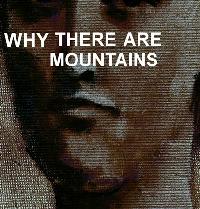
Why There Are Mountains
(www.myspace.com/cymbalseatguitars)
Well, it’s finally (almost) here! Ever since I was visiting New York City on business last March and our fearless editor, Jim Testa, dragged me out to see this new band he’s been championing, I’ve been awaiting this CD. After some fits and starts and a change of producer, the master mix appeared in my mailbox. It’s been a long, frustrating wait, but well worth it. Overall, it’s an excellent listen, and gets my highest recommendation. Let’s delve into it, a bit, shall we?
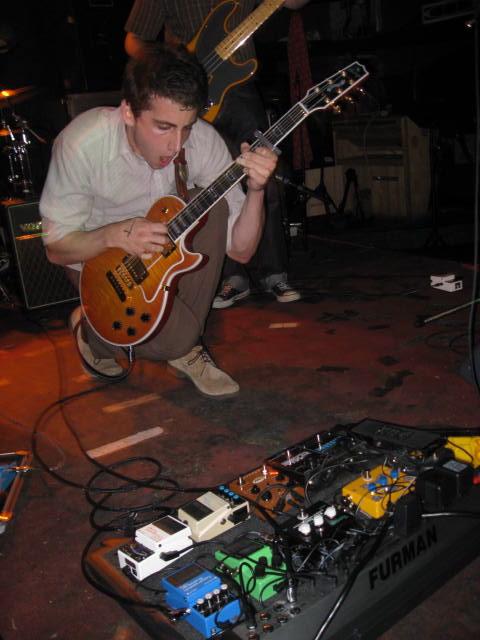
First, for those not familiar with the band, Cymbals Eat Guitars is an indie-band from New York City that features an incredible density of sound and phenomenal command of dynamic control. When I saw their live show, I mentioned to Jim that it sometimes sounds like they’re playing multiple songs at the same time, but it works. They can go from a quiet whisper to a cacophonous explosion in an instant. They layer sound on sound on sound, with keyboards, guitars, bass and drums, and the result is so complex without sounding overblown. And on their first studio effort, they toss in horns and strings to the mix, and it fits perfectly.
OK, now a comparison to the previous recordings and the new ones. There were three tracks well distributed on the Internet via mp3, “…And the Hazy Sea,” “Share,” and “The Living North.” Hazy Sea opens the new album, and at first, I was a little disappointed. I liked the previous recording, produced by Charles of the Wrens, somewhat better. It was just as dense and dynamic, a trademark sound of Cymbals Eat Guitars. But the new recording seemed to have a little more wanking around on it, particularly near the end of the track. There’s needless soloing and grandstanding, noises posing as artful hooks that don’t go anywhere. It’s still a good track, but I just like the other one much better.
The other two tracks were a relief; the new recordings work better than the old ones. “Share” was good before, but this new recording just blows me away. The opening is downright eerie, and the sadness is palpable. The tempo is slowed a bit, giving it more of a dirge-like mournfulness. The drone of the guitars adds to the atmosphere, and especially raising the level of the chanting vocals at the beginning sends chills down my spine. Just past the halfway mark, the mood starts to shift a little bit, with the introduction of horns, and the sadness, although still there, starts to fade. Finally, in the last two minutes of the track, everything changes again. The tempo quickens, the jangly guitars and keyboards lift the spirits. It’s as though we’ve just finally come through the grieving process. But, as with all grief, and as the final moments of the song reveal, there’s always the memory of the sadness that never goes away. Wow – none of this came through in the original session of this track. This is much better.
And “The Living North” is a more straight-ahead pop song. When the first recording of this was sent to me, I commented to singer/song-writer Joseph D’Agostino that, while nice, it just seemed too simple and clean in comparison to their other stuff. I don’t know if he took those comments to heart or just knew it already anyway, but this new version of the song works much better. It’s got a little more texture to the arrangement and is a little rougher and harder edged, without losing its pop sensibility.
OK, what about the rest of the album? There are nine tracks on the disc, so let’s examine the other six.
“Some Trees” was probably the first track that got me thinking about an odd comparison: Bobby Conn. Not that the music sounds the same, but the way the tempo shifts around and the way Joe sings this one, with kind f a swagger in his voice at times, reminded me a lot of Conn. This one is a pretty up-tempo track for the most part (though it starts off slowly, with wah-wahing guitar, a la Angelo Badalamenti). It sounds like it could have come from a rock opera, too, another trait it shares in common with a lot of the stuff from Conn.
“Indiana” starts out sounding like something you might hear from Spiritualized, for the first minute of the song, with cosmic sounds and quiet, yet soaring vocals. Then it suddenly shifts into a mid-tempo tune with an old-fashioned honky-tonk piano sound. Then it shifts again, blending the two sounds together. And then the horns come in, just adding to the whole effect.
“Cold Spring” continues the tradition of a single track packing in multiple styles and huge dynamic ranges. It starts out slowly and quietly, with keyboards, tinkling guitars, and Joe’s breathy, easy vocals. The rest of the band comes in to fill in the arrangement, and then the strings – yes, the strings, come in, and it’s just beautiful. More echoing guitars in the background provide more Spiritualized-like atmosphere. And just when you know how this song will evolve, at around the two and a half minute mark, it shifts. Well, we should have come to expect that by now. The sound thickens and the tempo increases. And then it shifts again. And again. And yet again. Quiet, loud, spacey, rocking, all together. And it’s all very melodic and harmonious; nothing ever sounds out of place.
“What Dogs See” has a spacey, dreamy quality is there throughout this track, and it doesn’t seem to shift like the others. It does have a distinct dream-like quality to it, very ethereal, very unreal. Very cool.
“Wind Phoenix” is another shifter, going between a breezy pop tune and aharper-edged rock tune, but with some of those qualities of coming from an indie-rock opera. Vibraphone gives it kind of a jazzy feel in places, too.
The album closer, “Like Blood Does,” starts out nice and quiet and calm, like an indie version of a torch song, something you might hear from the classic chanteuses of yore. And then. Oh, and then. At two and three quarter minutes in, the guitars start playing arpeggios with a spangle, and the drums start to pound in with a lo-fi menace. And, yes, more shift. Indie-pop takes over as the instrumentation fills in, and then the keyboards provide a spacey atmosphere again. The layering is incredible. It builds some more and turns from indie-pop to indie-rock. And it builds even more. A little more than two minutes before the end of the track, the guitars and keyboards explode in a cacophony of sound. And then it’s suddenly gone, and we’re back to the beginning, a quiet song, with just acoustic guitar and the plaintive vocals of Joe D’Agostino. The final moment is a discordant pound on the piano, and with that, the album is over. Whew!
It’s amazing that such incredible songs and arrangements could come from someone so young. Joe is a college student in New York. And while I’m sure his older, more experienced band mates contribute quite a bit, they would probably be the first to say that Cymbals Eat Guitars is Joe’s show. And not only is he a talented songwriter, his vocals are tremendous. He has an impossible range that’s just incredible, yet he makes it seem so easy, like he’s just singing to himself with a guitar in his bedroom.
I feel very privileged to have been able to see Cymbals Eat Guitars live, and I sure hope to get to see them again (maybe they’ll tour someday and make it out to the west coast?). And I am honored to have been able to get this advanced listen to the new album. OK, Jersey Beat readers, here’s your due warning. Watch for this album. I don’t know exactly when it will be released and hit the streets, but watch for it. And buy it as soon as you can. If you’re ever in the NYC area, check show listings to see if Cymbals Eat Guitars are playing. Better yet, check the show listings ahead of time and plan your trip to coincide with a live gig. You’ll thank me for it.
You can catch Cymbals Eat Guitars...
January 23 - 10:30pm at Vanishing Point, Brooklyn NY
January 28 - 10:00pm at Fontana's, New York, NY
www.myspace.com/cymbalseatguitars


 CD Reviews - Sneak Peek At An Unreleased Pick Hit